Showing posts with label books. Show all posts

Saturday, May 2, 2009

Book Giveaway: The Amazing Adventures of Dietgirl!


Enter here for a chance to win the book! :)


YOU NEED TO PUT YOUR INFO INTO THE BOX BELOW TO ENTER!! :)


It's a tool I use for giveaways to keep the entries and winner selection fair, so if you don't enter your info into this box, you're NOT entered. Comments won't get you into the giveaway! :)

Sunday, April 12, 2009

Super Cool Shout Out City.

The winner of my book giveaway this week left me a fabulous shout-out on her blog:


Everyone should go check out her blog. Her name is Deborah Chesher and she's a photographer. We met through some John Mayer twittering. Of course I dug her right away. John Mayer and photography are two of my greatest loves. ;)

She published a book called "Everybody I shot is dead" which chronicles photographs of musicians she has photographed over the years who have since passed away. She's uber talented, and you should order her book. :)


~J

Saturday, April 11, 2009

Congrats to the Winner!


Since I didn't have Mike Zume's fancy contest thing for this giveaway, I used the website www.random.org to select the winner for this book giveaway.


Congrats to Chesher Cat!

Stay tuned for my next book giveaway next week! :)


~Jenn

Saturday, March 7, 2009

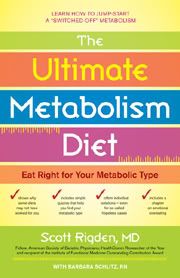
Book Review: The Ultimate Metabolism Diet

Woo-Hoo! Officially I am a book reviewer. Extraordinaire.

Yeah!

I will be reviewing books periodically from here on out. Some will be at the request of a publisher, and some will be of my own accord to talk about various books I read having to do with weight loss, eating disorders, nutrition, fitness or dieting. On occasion I might also review other books if they're particularly awesome or worth sharing. :)


The Ultimate Metabolism Diet

by Scott Rigden, MD


So, this book is really interesting. It talks about various reasons you could be overweight other than the obvious "eat too much, exercise too little." At first I was worried that this book would be a big excuse book for people who don't really try hard to lose weight the right way. For example, "Oh, well I am fat, so I must have a thyroid problem." or, "Well, I eat whatever I want but work out a little, and still I can't lose weight, so it must just be out of my control or mean I need pills."

Luckily, the book isn't like that. Basically, it addresses five different medical reasons (metabolic disorders) that can cause people to be overweight beyond basic nutrition and exercise.

1. Carbohydrate Sensitivity
2. Metabolic Syndrome
3. Hormonal Imbalances
4. Food Hypersensitivity
5. Liver Detoxification / Weight Gain with Chronic Illness

The book includes a quiz section for you to easily discover which of these five areas you might be struggling in. From there, the book divides itself into five chapters addressing each issue individually, and offering solutions with both diet and exercise to help maximize weight loss in the correct manner for your body and your specific needs.

It really made me happy to read that Dr. Rigden has been a weight loss specialist and ran a weight loss clinic in Arizona for many years. That is what led him to the discovery that there are five main types of metabolic disorders. With these disorders in mind, Dr. Rigden worked to develop plans that help people with each kind of metabolic disorder to lose weight and efficiently manage their own health.

The thing that really helped me take this book as real fact (as opposed to more medical fluffy hoopla) is the tons and tons of medical patient examples. It tells the stories of patients with these various metabolic disorders and how Dr. Rigden's services and plans helped them overcome their weight loss struggles, not to mention other medical issues. These solutions helped patients overcome a variety of things from asthma to eczema to major difficulty walking and more. It's also very interesting that these disorders are very common but rarely diagnosed by family doctors.

(A side note: I'm currently reading Health Food Junkies by Dr. Steven Bratman and as a holistic doctor he talks about food allergies very similarly to the way Dr. Rigden talks about them. I found it to be interesting that I am reading two books addressing similar disorders at the same time.)

The Ultimate Metabolism Diet also addresses emotional eating, exercise, depression, stress in your life, daily relaxation, inspiration, self image and self confidence. The other cool thing is that since you won't have each metabolic condition or problem, you won't need to read every chapter, so you don't have to feel overwhelmed by too much reading. :) It also has a section with recipes - they sound delicious and seem really easy to prepare.


A few of my favorite factoid excerpts:

"When an overweight person logs 10,000 steps per day, it almost guarantees at least a two-pound weight loss in a week." (Good news for my buddy Mike over at zumewalk)

"Scientific studies have shown that people suffering from ulcers and excessive stomach acid production literally cannot make excessive acid if they are smiling or laughing."

"Emotional eating almost always leads to inappropriate eating. Without realizing it, you may be caught in a vicious cycle of "living to eat," not "eating to live."


I didn't find many downsides to this book. I tend to wish all the things in the book would apply to me because I love to read and I want tons of information to soak into my brainy sponge. So, if you're like me in that regard you might not enjoy skipping chapters that don't apply to you.

The only other thing was that there is a lot of medical information in this book, and quite a bit of medical industry terminology. The book does provide glossary information at the beginning of each chapter for these words and terms, but it can feel a little bit confusing if you don't remember all of the definitions. Luckily it is really easy to refer back to the beginning of each chapter, and Dr. Rigden repeats some of the definitions in the chapters as well.


Overall I would recommend buying this book if you find you're struggling with traditional methods of weight loss. By that, I mean that you've actually tried eating healthy, balanced meals and working out or getting moderately intense activity for at least 250 minutes per week. If that method has not worked for you, and you've diligently done it for at least a period of six months with little to no result, this book might be the right way to go!

And if that doesn't describe you but you have an interest in metabolic health, or if you want a good introduction to it, it contains a lot of valuable information and could help aid anyone on their journey of good health and well being. You can buy it here or here.


~J

Monday, March 2, 2009

Dr. Steven Bratman and Orthorexia Nervosa

I recently discovered that my favorite Doc in Colorado, Steven Bratman M.D., is an author and coined the term "Orthorexia Nervosa" to describe people overly obsessed with eating healthy food.

I wanted to share this video with you. It's a spot from 20/20 and features bits of an interview with Dr. Bratman.

I purchased his book, "Health Food Junkies" and will be reviewing it on my blog within the next few weeks. In the mean time you can watch this video. It's really interesting. Though I think I'll mention that Dr. Bratman says not to take this video too seriously. 20/20 has a tendency to cut and paste a lot of different things to make the story what they want it to be. On that note, he also told me that Johnny is definitely Anorexic as opposed to having Orthorexia. But, it's an intro for you at the least, and I found it to be intriguing.

If you want a jumpstart on the book, you can pick one up here at Amazon.com. Oh, and don't forget to visit Dr. Bratman's website here.


~Jenn

Monday, February 16, 2009

Warning: GROSS.

Okay, so I'm on the verge of becoming a fishatarian.

I just finished reading "Fast Food Nation" by Eric Schlosser. I highly, HIGHLY recommend reading this book. I'm going to share with you guys a few things that are incredibly disturbing about the meat packing industry, and... it just might put you off beef the way it has for me.

I honestly don't know if I'll be able to eat beef again, and I struggled to buy chicken yesterday. I got free range, steroid and hormone free and it made me feel a little better.

There are two things to remember when you read this.
1. The facts in this book were meticulously researched, recorded and reported. They have not been proven false despite many attacks against the author.
2. Since the publishing in this book, through the Bush administration, the conditions have worsened. This was discovered by follow up visits to the plants and allowed to happen by the Bush Administration reversing public health safety bills due to large donations to his campaign from interested parties such as The American Meat Institute and The National Restaurant Association. A quote from the book: "One of the Bush administration's first food safety decisions was to stop testing the National School Lunch Program's ground beef for Salmonella."


Okay, so here we go. I'm just going to spew out a bunch of stuff here - if you have a weak stomach you might not want to read this.

"Behind them [the medical literature on the causes of food poisoning] lies a simple explanation for why eating a hamburger can now make you seriously ill: There is shit in the meat.

"Some herds of American cattle may have been infected with E. coli decades ago. But the recent changes in how cattle are raised, slaughtered, and processed have created an ideal means for the pathogen to spread. ... The cattle now packed into feedlots get little exercise and live amid pools of manure. "You shouldn't eat dirty food and dirty water," the official told me. "But we still think we can give animals dirty food and dirty water." Feedlots have become an extremely efficient mechanism for "recirculating the manure," which is unfortunate, since E.coli can replicate in cattle troughs and survive in manure for up to 90 days.

"About 75 percent of the cattle in the US were routinely fed livestock wastes - the rendered remains of dead sheep and dead cattle - until August of '97. They were also fed millions of dead cats and dead dogs every year, purchased from animal shelters. The FDA banned such practices after evidence from Great Britain suggested that they were responsible for a widespread outbreak of ..."mad cow disease." Nevertheless, current FDA regulations allow dead pigs and dead horses to be rendered into cattle feed, along with dead poultry. ...cattle blood is still put into the feed given to American cattle. 'They're designed to eat grass and, maybe, grain. I mean, they have four stomachs for a reason - to eat products that have a high cellulose content. They are not designed to eat other animals.'

"The waste products from poultry plants, including the sawdust and old newspapers used as litter, are also being fed to cattle. ...chicken manure may contain dangerous bacteria such as Salmonella and Campylobacter, parasites such as tapeworms and Giardia lamblia, antibiotic residues, arsenic, and heavy metals.


I'm going to paraphrase here because there's too much to type. A big disease spreader in the butchering of cattle is with the removal of the innards. That's where all the nasty bacteria live, and these workers have to remove the stomach and intestines, tie them off and discard of them without spilling the contents. It takes an average worker 6 months to learn how to do it right, and the best among them can't do more than 200 in a row. Inexperienced gutters spill a lot more often. So, one mistake's consequences multiply really quickly as the carcass moves down the line - contaminated knives aren't sterilized regularly enough, and spread the disease to the next carcass it cuts.

The huge number of cattle processed in each slaughterhouse, each day (by hand) are due to the extreme demands of beef from large fast food companies such as McDonald, Burger King and Wendy's. Some plants slaughter up to 400 cattle an hour.

The estimation is that up to 50 percent of cattle in large slaughterhouses are infected by the microbe.

"Even if you assume that only 1 percent are infected, that means three or four cattle bearing the E coli microbe are eviscerated at a large slaughterhouse every hour. The odds of widespread contamination are raised exponentially when the meat is processed into ground beef.

"...the animals used to make about one-quarter of the nation's ground beef - worn-out dairy cattle - are the animals most likely to be diseased and riddled with antibiotic residues. ...Like the multiple sex partners that helped spread the AIDS epidemic, the huge admixture of animals in most American ground beef plants has played a crucial role in spreading E. coli. A single fast food hamburger now contains meat from dozens or even hundreds of different cattle.

"This is no fairy story and no joke," Upton Sinclair wrote in 1906, "the meat would be shoveled into carts, and the man who did the shoveling would not trouble to lift out a rat even when he saw one - there were things that went into the sausage in comparison with which a poisoned rat was a tidbit." Sinclair described a long list of practices in the meatpacking industry that threatened the health of consumers: the routine slaughter of diseased animals, the use of chemicals such as borax and glycerine to disguise the smell of spoiled beef, the deliberate mislabeling of canned meat, the tendency of worker to urinate and defecate on the kill floor.

"A 1992 USDA study of the Streamlined Inspection System for Cattle concluded that beef produced under the program was no dirtier than beef produced at slaughterhouses fully staffed by federal inspectors. But the accuracy of that study was thrown into doubt by the revelation that meatpacking firms had sometimes been told in advance when USDA investigators would be arriving at SIS-C slaughterhouses. The Monfort beef plant in Greeley, Colorado, was one of the original participants int he program. According to federal inspectors there, the meat produced under the SIS "had never been filthier." At SIS-C slaughterhouses, visibly diseased animals - cattle infected with measles and tapeworms, covered with abscesses - were being slaughtered. Poorly trained company inspectors were allowing the shipment of beef contaminated with fecal material, hair, insects, metal shavings, urine, and vomit.


Aside from all of that, the book discusses the high injury rate in the meatpacking industry, along with the terrible way the injuries are handled. The "fine" to the company for someone dying on the job is $441. The meatpacking industry requires individuals to sign waivers directly after being injured. If they're rushed to a hospital, they are followed by a representative. There was a woman who had both her hands crushed, and they talked her into signing the waiver with the pen in her mouth. The waiver states that they will hold the meatpacking company harmless and only see the doctors they want them to see, along with not reporting the injury, or they'll lose their jobs. They also hire a great deal of illegal immigrants, so if something goes wrong, or they get tired of the brutal conditions of the job, they can only take it so far because they're not legal to work in this country.


Seriously, go pick up the book. It'll change your life.

~J

Wednesday, January 21, 2009

Tammy's Favorite Smoothie!

So, my super helpful trainer gave me some great recommendations:

The Abs Diet (book by David Zinczenko)
Lots of nutritional info
Reminded me to not eat anything with high fructose corn syrup

Delicious smoothies including her favorite:
1 scoop protein powder (vanilla for me)
1/2 cup mixed frozen berries
1 tbsp ground flaxseed
1 cup skim milk
4 ice cubes


YUM~~~!!!!!!!!!!


Also, I did 30 minutes of the Wii Fit yesterday in a tiny room, and sweated my balls off.

Seriously, I loved it. I have sore abs and sore arms and shoulders today. LOVE it.


Also I LOVE American Idol. Seriously and ridiculously. YAY for good singers - I get chills with the good ones! :)